
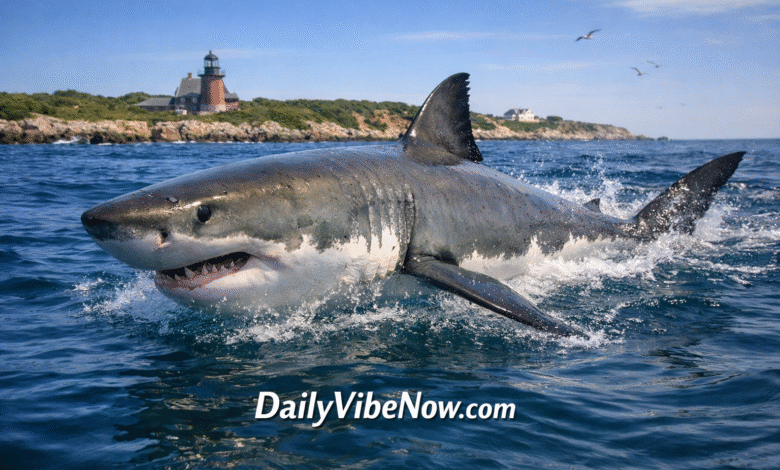
The calm waters off Block Island turned into a scene of tension and disbelief this week as reports of a massive great white shark sent shockwaves through beachgoers and locals alike. What began as a routine summer day quickly escalated into a viral moment, with videos, eyewitness accounts, and emergency alerts flooding social media. The phrase “great white shark block island” surged across search trends as people scrambled for answers. Was it a rare sighting—or a sign of something bigger happening beneath the surface?
Within hours, beaches saw sudden evacuations, lifeguards raised warning flags, and authorities began investigating. For many, the encounter felt surreal, almost cinematic. Yet marine experts say this may not be as unusual as it seems. The growing number of sightings raises urgent questions about ocean patterns, climate shifts, and human interaction with marine predators. What’s really happening near Block Island—and should swimmers be worried?


Sudden Sighting Shakes Block Island Beaches
The incident unfolded when multiple beachgoers reported spotting a large dorsal fin cutting through the water just off the coast. Lifeguards acted swiftly, clearing swimmers from the ocean as precautionary measures kicked in. Within minutes, images and videos began circulating online, amplifying concern and pushing “great white shark block island” into trending territory across the United States.
Authorities later confirmed that the shark was indeed a great white, estimated to be over 10 feet long. While no injuries were reported, the psychological impact was immediate. Families packed up, swimmers stayed ashore, and local businesses felt the ripple effects. The presence of such a powerful predator so close to shore has reignited debates about safety and awareness during peak beach season.
Why Great White Sharks Are Appearing More Frequently
Marine biologists suggest that sightings like the great white shark block island incident are becoming more common due to environmental changes. Warmer ocean temperatures, shifting prey patterns, and conservation efforts have contributed to a noticeable increase in shark populations along the East Coast. Seals, a primary food source for great whites, have also returned in larger numbers, attracting these apex predators closer to shore.
Additionally, improved tracking technology and increased public awareness mean more sightings are being reported than ever before. What might have gone unnoticed a decade ago now becomes viral news within minutes. Experts emphasize that while the presence of sharks may sound alarming, it often indicates a healthier marine ecosystem rather than an immediate threat to humans.
Public Reaction and Social Media Frenzy
As news of the great white shark block island sighting spread, social media platforms lit up with reactions ranging from fear to fascination. Videos of the shark quickly gained millions of views, with hashtags trending nationwide. Some users shared past experiences, while others speculated about the reasons behind the encounter, fueling widespread curiosity.
Local officials used these platforms to issue safety reminders and updates, urging calm while reinforcing precautionary measures. Despite reassurances, the emotional response was intense. For many, seeing such a powerful creature so close to recreational waters blurred the line between nature and perceived danger, making the event feel more immediate and personal.
Impact on Tourism and Local Economy
Block Island, known for its scenic beaches and summer tourism, felt the economic effects almost instantly. Businesses that rely heavily on beach traffic reported a temporary dip in visitors as concerns spread. The phrase “great white shark block island” not only dominated search engines but also influenced travel decisions for families planning their vacations.
However, some local entrepreneurs found opportunity in the attention. Shark-themed tours, merchandise, and educational events saw a spike in interest. While initial reactions leaned toward caution, the long-term impact may balance out as curiosity replaces fear. Tourism experts suggest that such events, if managed correctly, can even boost visibility and attract a different kind of visitor.
Safety Measures and What Swimmers Should Know
Following the great white shark block island sighting, authorities reinforced existing safety protocols. Lifeguards increased patrols, drones were deployed for monitoring, and warning systems were tested to ensure rapid response in case of future sightings. Experts advise swimmers to stay in groups, avoid areas with active fishing, and remain alert to official warnings.
It’s also important to understand that shark attacks remain extremely rare. According to recent data, the odds of being bitten by a shark are significantly lower than many everyday risks. Still, awareness is key. The recent incident serves as a reminder that humans share the ocean with powerful wildlife, and respecting that balance is essential for safety.
What This Means for the Future of Coastal Waters
The great white shark block island event may signal broader changes in marine behavior. Scientists are closely monitoring patterns to understand how climate change and conservation efforts are reshaping ocean ecosystems. Increased sightings could become the new normal, especially in regions where prey populations are thriving.
Looking ahead, technology will likely play a bigger role in managing these interactions. Real-time tracking, AI-powered detection systems, and public alert apps could help minimize risk while allowing people to enjoy coastal areas safely. The challenge lies in balancing human activity with the natural movements of marine life—a task that requires both innovation and awareness.
A Wake-Up Call for Ocean Awareness
Beyond the headlines, the great white shark block island sighting highlights a deeper message about our relationship with the ocean. It underscores the importance of education, respect for wildlife, and preparedness in the face of unexpected encounters. As coastal populations grow and ocean conditions evolve, such moments may become more frequent.
For now, Block Island remains on alert but not in panic. Life continues, beaches are reopening, and curiosity is gradually replacing fear. The ocean, vast and unpredictable, continues to remind us of its power and mystery. Staying informed and cautious is the best way forward.
Stay updated on the latest developments, follow official safety guidelines, and share this story to keep others informed about the evolving situation around great white shark block island.
