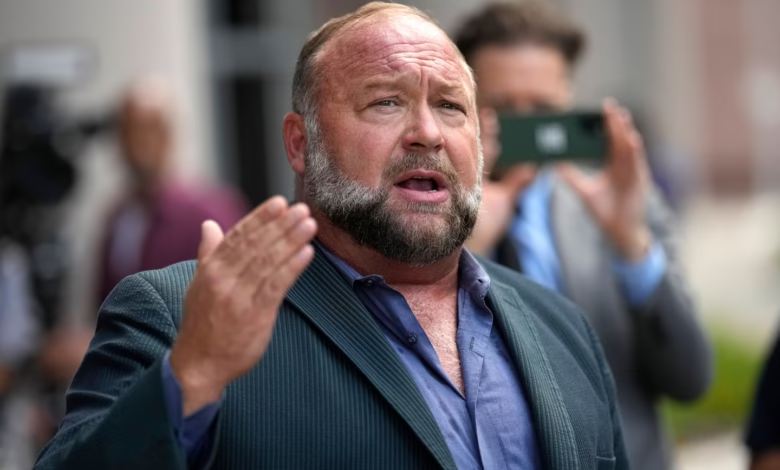
The phrase “infowars breaking news” is suddenly exploding across search trends, social feeds, and online forums in the United States. What started as another spike in alternative media chatter has now evolved into a much larger conversation about digital influence, political narratives, and the future of independent broadcasting. Millions of Americans are once again searching for updates tied to the controversial media platform, while clips, livestream reactions, and viral discussions continue spreading at lightning speed across multiple platforms.
For many readers, the renewed interest feels bigger than a normal media cycle. Some see it as a reflection of growing distrust in mainstream coverage. Others believe the trend reveals how polarized online audiences have become ahead of another major election season. Either way, the return of “infowars breaking news” to trending searches is creating intense curiosity, emotional reactions, and nonstop debate nationwide.


Why Infowars Breaking News Is Trending Again
The latest surge around “infowars breaking news” did not happen randomly. Search traffic reportedly climbed after several viral discussions tied to censorship debates, digital platform restrictions, and resurfaced clips began circulating online. Social media algorithms quickly amplified those conversations, especially among users already engaged with political commentary and alternative news communities.
At the same time, online creators and commentators started referencing older Infowars content while comparing it to today’s political climate. This sparked renewed interest among younger audiences who may not have followed the platform during its peak years. Many users began searching for context, old broadcasts, and real-time updates connected to ongoing cultural and political tensions in the United States.
The History Behind the Infowars Brand
To understand why “infowars breaking news” still generates massive attention, it helps to look at the platform’s long and controversial history. Infowars became one of the most recognized alternative media brands in America during the 2000s and 2010s. The outlet built a loyal audience through aggressive commentary, conspiracy-focused reporting, and anti-establishment messaging.
Over the years, the brand became deeply tied to heated national debates involving media freedom, misinformation, and political polarization. While critics accused the platform of spreading false narratives, supporters argued it challenged mainstream institutions and offered viewpoints ignored by traditional outlets. That divide remains central to why the topic still triggers strong reactions online today.
Social Media Algorithms Are Fueling the Trend
One major reason “infowars breaking news” continues gaining traction is the power of modern recommendation algorithms. Viral clips no longer need television airtime to reach millions. Short-form videos, reposted livestreams, and reaction content can spread across the internet within hours, especially when tied to controversial topics.
Experts in digital media have repeatedly warned that emotionally charged content often performs best online. Posts involving conflict, outrage, or political identity tend to generate more comments and shares. Because Infowars has historically operated within highly emotional political conversations, the content naturally attracts engagement from both supporters and critics, creating a cycle that keeps the keyword trending.
Alternative Media Is Becoming More Influential
The renewed popularity of “infowars breaking news” also reflects a much larger shift happening in American media. Traditional television audiences are shrinking, while independent creators, podcasts, livestreams, and digital commentary channels continue growing rapidly. Millions of Americans now consume news primarily through social platforms instead of cable networks.
This shift has opened the door for alternative media ecosystems to gain more influence than ever before. Audiences increasingly seek perspectives outside mainstream journalism, especially during election years or moments of political uncertainty. Analysts say this changing behavior could permanently reshape how news spreads in the United States over the next decade.
Political Tensions Are Driving Search Interest
Political uncertainty remains one of the strongest drivers behind the recent search surge. With national debates intensifying around elections, free speech, government transparency, and online moderation, users are searching for every possible angle and narrative source. That environment naturally boosts interest in controversial platforms associated with anti-establishment viewpoints.
Some political strategists believe keywords like “infowars breaking news” trend because emotionally charged political content creates stronger audience loyalty. Viewers often return repeatedly for updates, reactions, and commentary that reinforce their beliefs or challenge opposing views. This behavior increases watch time and engagement, making the topic even more visible online.
The Role of Controversy in Viral Media
Controversy has always been one of the internet’s strongest traffic engines. In today’s attention economy, topics connected to outrage or public conflict frequently dominate search results. The Infowars brand exists at the center of that reality. Every debate surrounding the platform tends to generate another wave of curiosity, reactions, and media coverage.
Marketing experts say controversial figures often maintain cultural relevance longer because they continuously provoke discussion. Whether audiences agree or disagree with the content, they still engage with it. That engagement creates momentum across platforms, helping terms like “infowars breaking news” repeatedly return to trending status despite years of criticism and legal scrutiny.
Younger Audiences Are Discovering Old Media Clips
A surprising part of the current trend involves younger internet users discovering archived content for the first time. Many Gen Z users were children during Infowars’ biggest media moments, but viral reposts on short-form video platforms are introducing old clips to entirely new audiences.
This phenomenon mirrors what has happened with older television interviews, podcasts, and political speeches that suddenly resurface online years later. Once a clip gains traction, reaction creators begin discussing it, meme pages repost it, and viewers search for the original source. That digital chain reaction can rapidly revive interest in topics previously considered outdated.
Media Experts Warn About Information Overload
As “infowars breaking news” continues trending, media analysts are also warning about the risks of information overload. In today’s online environment, users are exposed to thousands of headlines, clips, and conflicting narratives every day. Distinguishing between verified reporting, commentary, satire, and speculation has become increasingly difficult.
Some experts argue that audiences should approach all viral news trends carefully, especially when emotionally charged topics dominate timelines. They recommend comparing multiple sources, checking publication credibility, and avoiding the urge to instantly share unverified claims. In a fast-moving digital ecosystem, misinformation can spread just as quickly as legitimate reporting.
Independent Journalism Faces a Turning Point
The renewed attention around Infowars has reignited broader conversations about independent journalism in America. Supporters of alternative media argue that independent voices are necessary to challenge powerful institutions and diversify public debate. Critics counter that accountability and factual standards become harder to maintain outside traditional journalism systems.
This debate is likely to intensify as digital platforms continue evolving. Podcasts, creator-led news channels, and independent livestream networks are already reshaping the media landscape. Some analysts believe future audiences may trust personality-driven journalism more than legacy networks, while others fear growing fragmentation could deepen political divisions nationwide.
What the Future Could Look Like
The current “infowars breaking news” trend may eventually cool down, but the larger forces driving it are unlikely to disappear anytime soon. Americans are consuming information differently than they did even five years ago. Search behavior, algorithm-driven content, and alternative commentary ecosystems are now deeply connected to how public opinion forms online.
Future election cycles, platform moderation debates, and viral political moments will probably continue pushing controversial media topics back into the spotlight. Digital culture moves fast, but attention surrounding polarizing brands rarely disappears permanently. Instead, it often returns stronger whenever social tensions rise again.
Why This Trend Matters Beyond One Platform
What makes the “infowars breaking news” surge important is not only the platform itself, but what it reveals about modern internet behavior. The trend highlights how online audiences respond to controversy, how algorithms shape visibility, and how alternative narratives spread across digital communities.
It also shows that Americans remain deeply divided over trust in institutions, media organizations, and information sources. That distrust is becoming one of the defining cultural forces shaping online conversation today. Whether viewed as a warning sign or a symbol of media evolution, the trend reflects a rapidly changing digital landscape that continues influencing politics, culture, and public opinion.
The conversation surrounding “infowars breaking news” is far from over. As new developments emerge and online debates intensify, audiences across the United States will continue searching for updates, reactions, and deeper context. Stay connected for the latest trending news stories shaping America’s digital future.
You may Also read
Dak Prescott Wife Rumors Explode as Fans Spot Major Clues Online